Open nowMoney Explorer
The first SPAFA course. Eight topics, each one a place rather than a chapter — a mall, a bank, a gaming zone they have to run — ending in a capstone your child completes with you.
SPAFA is a simulation platform for real-world skills, ages 12 to 18. It starts with money: your child makes real financial decisions in a safe place, and you get a plain report on how they think.
SPAFA stands for Student Profile and Future Advancement.

Financial literacy is on the syllabus. In most classrooms it stays a worksheet. Children learn about money the way they learn everything else, by getting it wrong first. SPAFA lets them get it wrong where it costs nothing.
Home loan EMI debited.
School tests the first. Life tests the second.
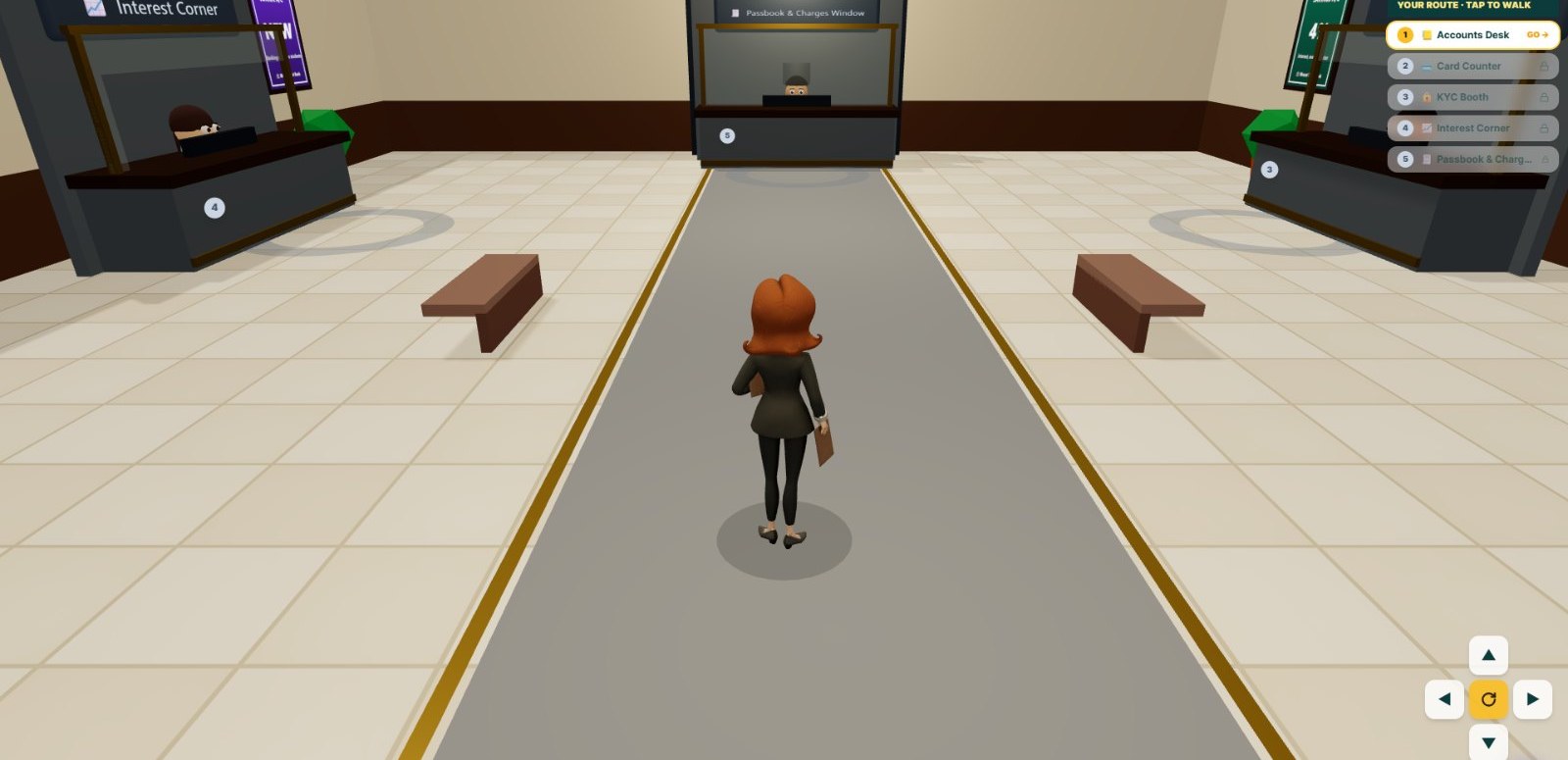
Banking · Riya walks into the bank
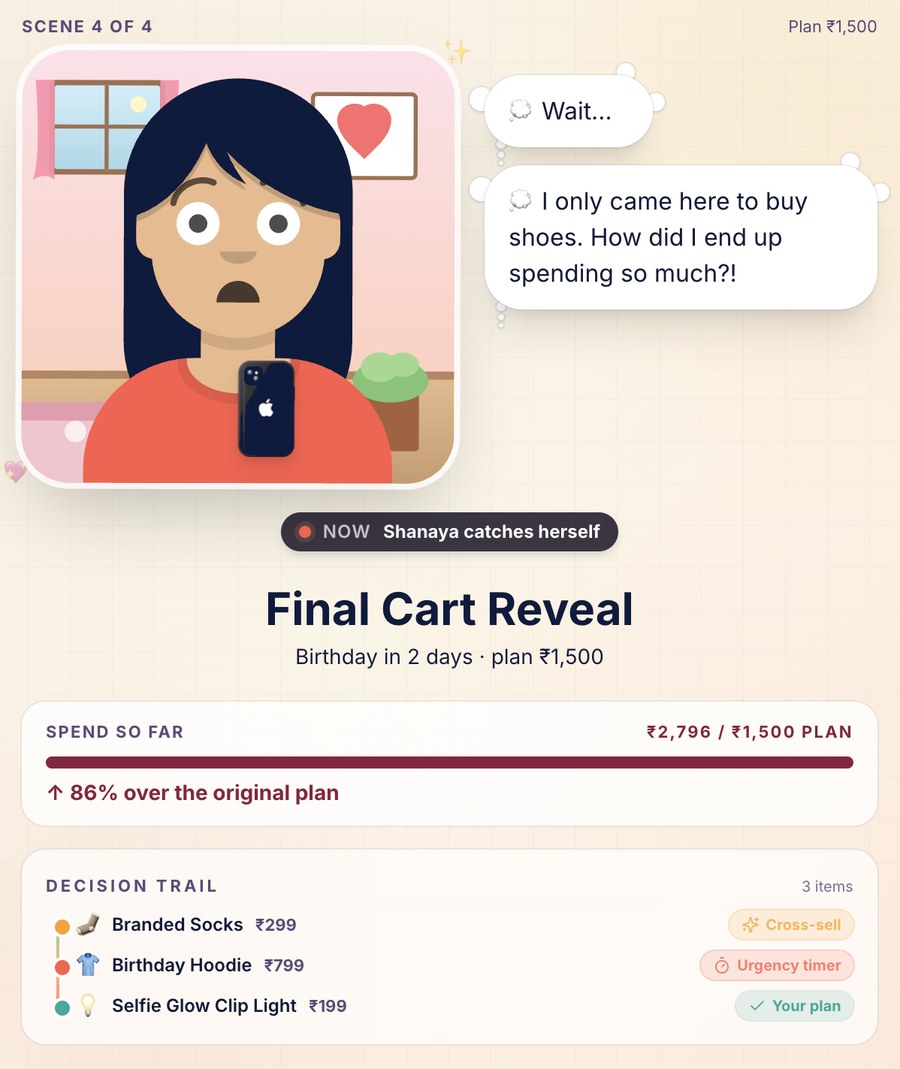
Scene 4 · Shanaya catches herself
Your child gets a budget and a wish list. Overspend here and the next act starts in debt.
A month's income to split between needs, wants and savings. Every choice changes the outcome.
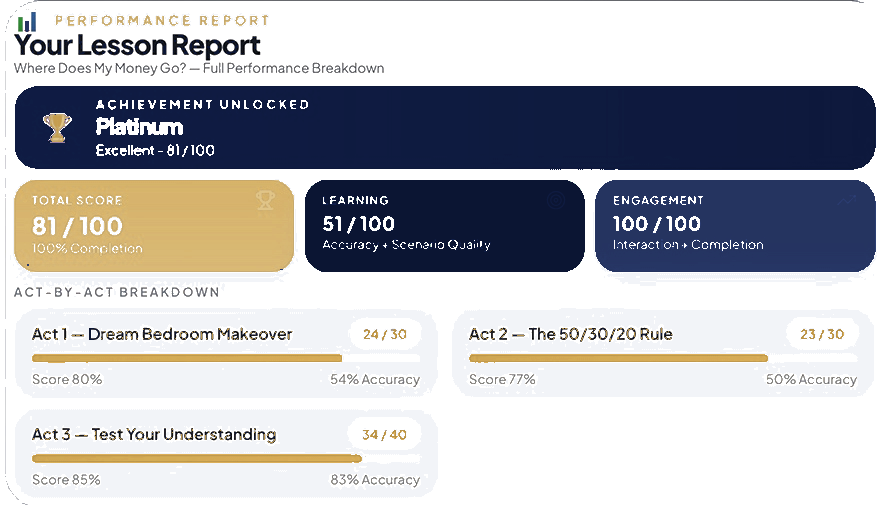
Frame: Act 2 as scored in a real Lesson Report.
Scenarios that check whether the lesson stuck.
Frame: Act 3 as scored in a real Lesson Report.
Every decision is recorded. Nothing is marked by a teacher. The simulation shows the result.
Every SPAFA course is a set of situations, not a set of chapters: your child decides, and the simulation shows what the decision did.
See the full course
Open nowThe first SPAFA course. Eight topics, each one a place rather than a chapter — a mall, a bank, a gaming zone they have to run — ending in a capstone your child completes with you.
Explore what it takes to run a simulated business and make decisions along the way.
Step into simulated professional roles and experience aspects of different kinds of work.
Not a mark. A breakdown of how your child decided: where they spent, what they saved, where they got caught. It comes to your WhatsApp in plain language. You do not need to know finance to follow it.
Did the ideas land? Accuracy of decisions and the quality of the scenario answers.
Did they finish and think it through? Completion and interaction.
Shows exactly which situation tripped them up, so you know what to talk about.
A real report from the first lesson, Where Does My Money Go?


You sign up with your name, email and phone number. Your child opens the lesson on a phone, tablet or laptop. Nothing to install.
The lesson drops them into a situation. They decide. The simulation shows what the decision did.
Once the lesson is finished you get the Lesson Report on WhatsApp, with two or three questions to ask at dinner.
In the Founding Batch the next lesson opens once the one before it is finished. Each report adds to the Growth Portfolio.

No marks. The act closes with what happened and why it happened, before the report reaches you.
Reports, reflections and challenges stack up into a record of how your child thinks about money and decisions. It starts with Financial Literacy. The tracks that follow add to the same portfolio.

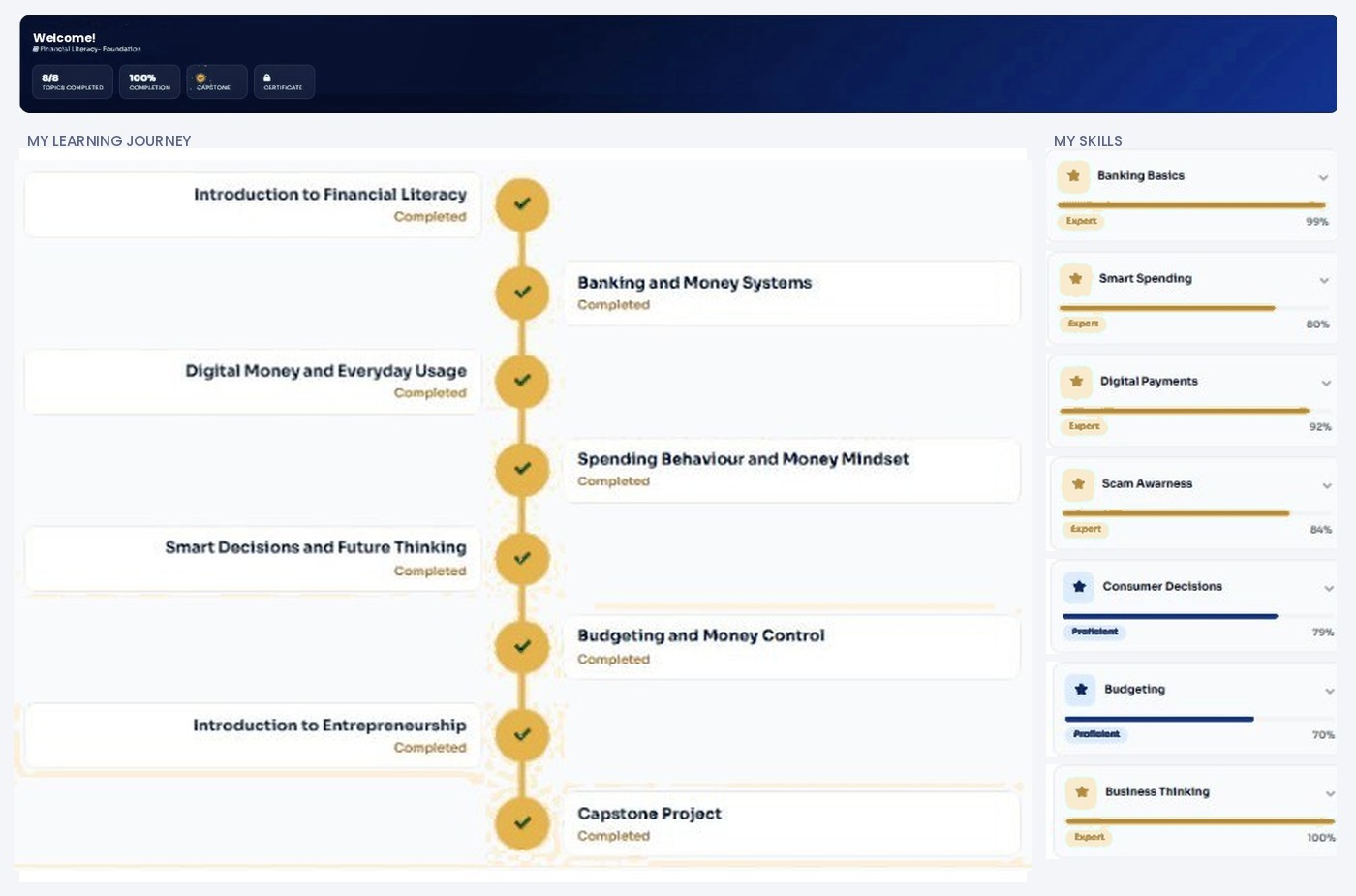
Financial Literacy is SPAFA's first course, in three levels that grow with your child, from Money Explorer to Financial Planner, each ending with a capstone. Level 1 is eight topics long, and every topic is a place your child walks into: a mall, a bank, a gaming zone they have to run. Each level runs the same way: explore a situation, decide, reinforce it with a short assignment, apply it in the capstone.
What money is and how it moves through daily life. Where every good money habit starts.
8 topics and a capstoneReal trade-offs: spending traps, credit and debt, and the first steps into saving and investing.
CapstoneA dry run for independence: a first salary, rent, investing, tax, and starting a business.
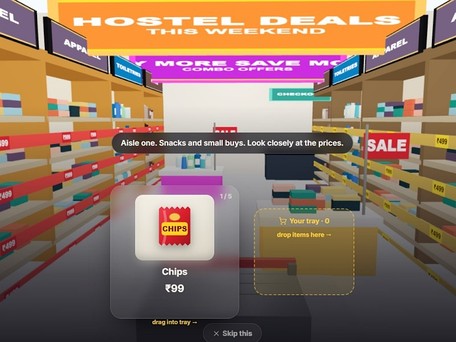
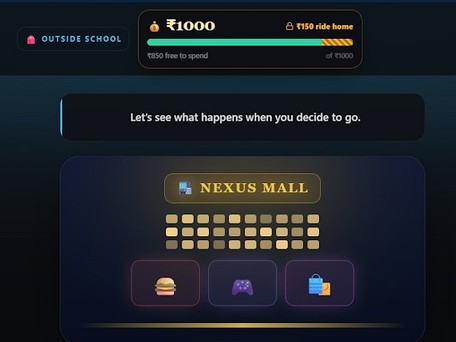
Capstone₹1,000, an afternoon out after school and a mall full of things to spend it on. The first choices, and what they leave for the ride home.


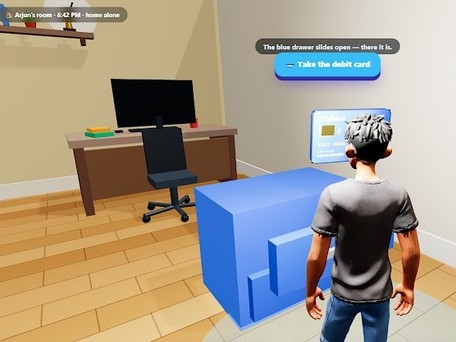
A walk through a bank: the accounts desk, the passbook, the card counter. Then a first debit card, and what it takes to use one.
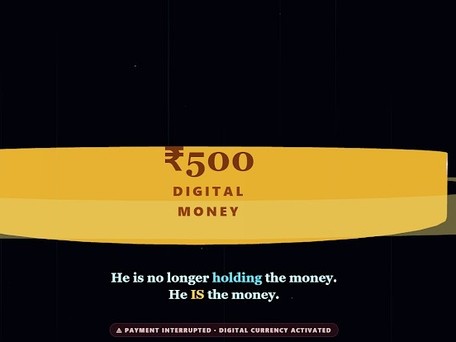
Debit Cards and Accessing MoneyUPI, cards and wallets: where the money goes when you tap. Then the free trials and messages built to catch a teenager out.
Common Scams Students Face

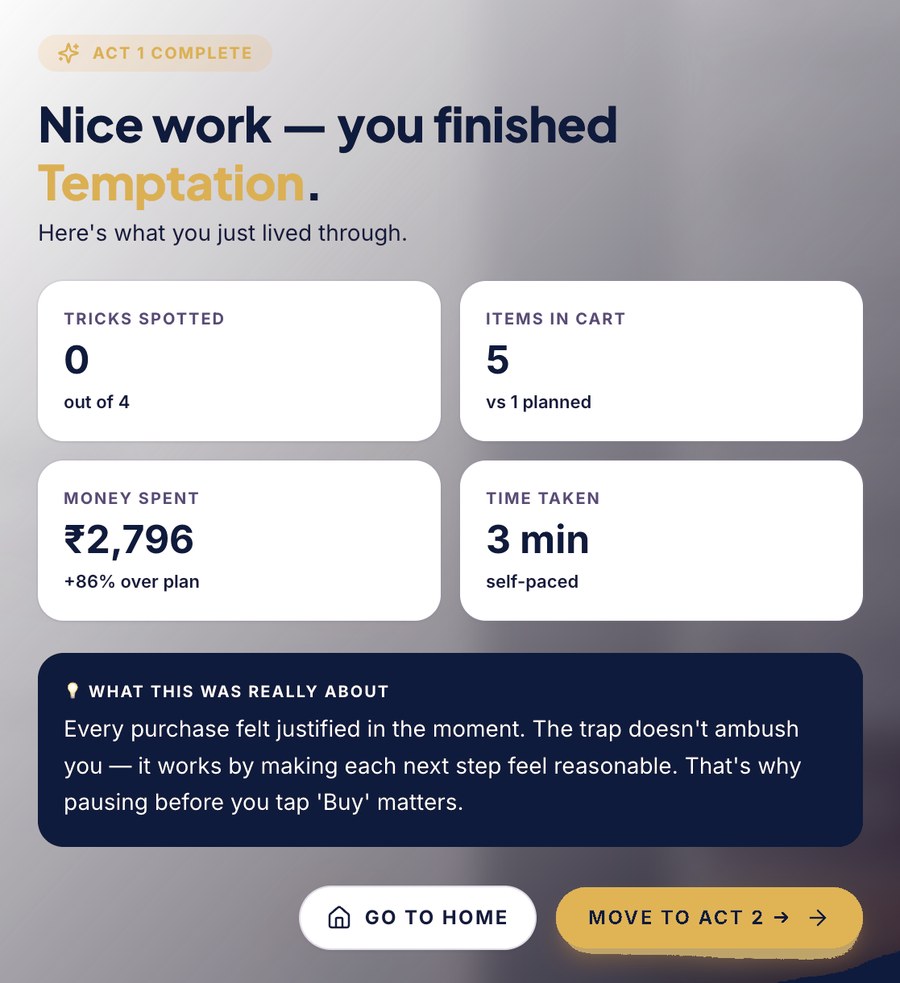
Flash sales, combo offers and countdown timers. How a ₹1,500 birthday plan ends at ₹2,796, and how to see it coming.
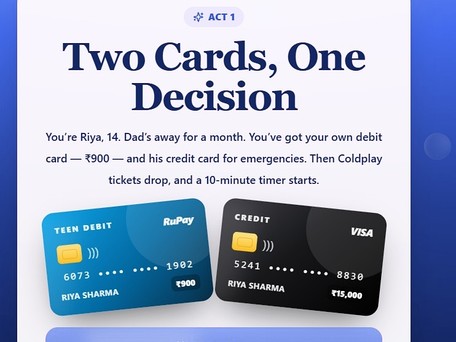
Think Before You SpendA debit card, a parent's credit card and a ticket sale with a 10-minute timer. Choices whose cost arrives later.
Why Borrowing Can Be Risky

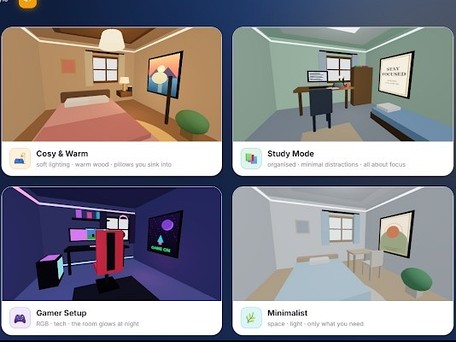
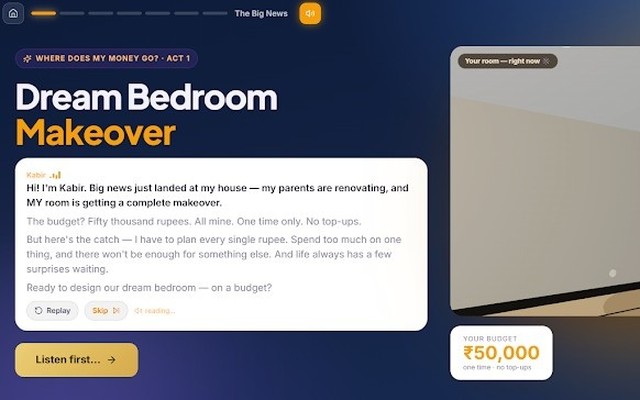
A ₹50,000 bedroom makeover, sorted item by item into needs and wants, and what happens to the plan when the split slips.
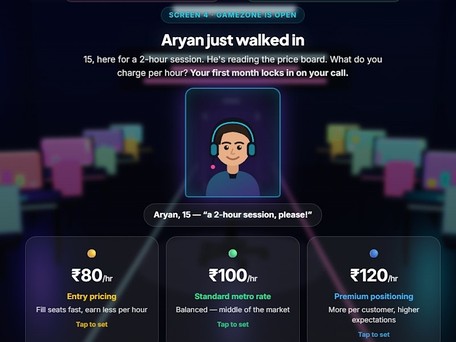
Where Does My Money Go?Run a gaming zone. Set the price per hour, sort revenue from cost, then compare it with the chai stall down the street.

The Family Smart Shopping Challenge: a real shopping trip, logged step by step, with a parent to verify it. It closes Level 1.
SPAFA is built as learning tracks, one for each kind of situation a young person has to handle. Financial Literacy is open now. The tracks that follow are being built on the same rule: a real situation, a decision, a consequence, in a safe place. Every track adds to the same Growth Portfolio.
Traditional learning measures what students know. SPAFA shows who they are becoming.
SPAFA, short for Student Profile and Future Advancement, is made by LeanHyphen Trainings LLP in Hyderabad. We run future readiness programmes in 35+ partner schools across Telangana and Andhra Pradesh and have reached more than 25,000 students. SPAFA is new. It is built by the same team, on what we have learned in those classrooms since 2023.
Are you a school? See our programmes at leanhyphen.com.
From the foundersWe started LeanHyphen because we kept meeting bright students who could solve an equation and could not read a bank statement. Financial decisions were the first thing we built, because every child will make them, and most will make the first few badly. SPAFA is how we bring that work home to families. What we promise you is simple: you will see how your child thinks, not just what they scored.
Founding memberThe price for the first 200 students. After that, ₹3,999.
Asked the way they arrive. Answered the same way.
Twenty minutes, free, and you will know whether this is right for your child.
Free. About 20 minutes. The report comes to your WhatsApp.